
The Abbatial Election has been suspended. Please read for more information.
Welcome to the Hilltop
Since 1889, Saint Anselm College has provided a transformative education shaped by Catholic and Benedictine values and a liberal arts foundation. Here, you are part of a welcoming community where you will discover your passions, experience cherished traditions, and unlock your full potential.
Top100.00100
national liberal arts college by Forbes
99.0099%
of identified graduates of the class of 2023 are either employed, pursuing further education, serving in the military, or volunteering
#24.0024
most engaged in community service by Princeton Review
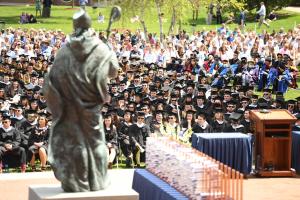
Celebrating the Class of 2024
The 131st commencement exercises are on Sat., May 18 at 10 a.m. We will be celebrating the class of 2024 with undergraduate and graduate events and programs May 17 – 18.
Meet Our Anselmians
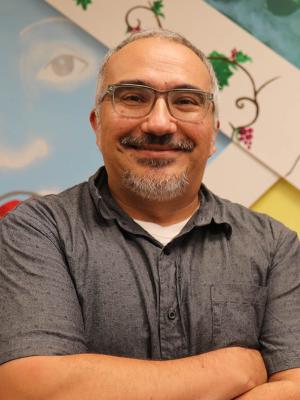
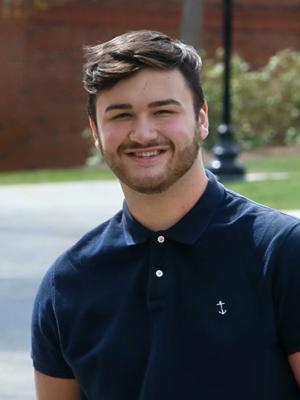

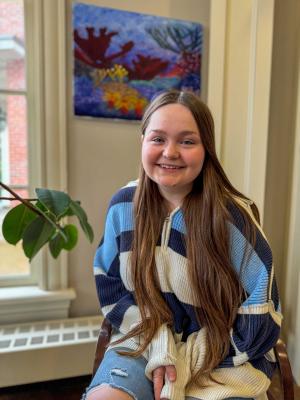
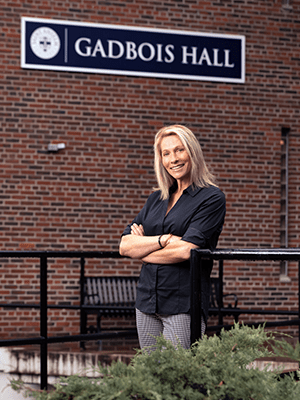
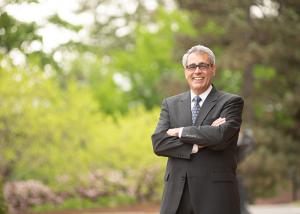
"I believe with all my heart that today’s world needs Saint Anselm College, a place that is infused with the Catholic and Benedictine values of community, hospitality and love, where the humanities, arts and sciences and professional programs like nursing, criminal justice and business build on our liberal arts core rather than compete with it. We need a place where you don’t have to choose between career outcomes and life outcomes. That place is Saint Anselm."
In the classroom and in the community, an Anselmian education will challenge you to find your best self.
Anselmian News
Interdisciplinary Special Topics Course is “Unlike Any Other”
Last fall, a new special topics course blended history and literature in a…
Anselmians Make Record Gifts to Support Saint Anselm College Now and Always
During the 10th annual Days of Giving campaign, the college a record $1.43…
Saint Anselm students play role in President Biden’s NH visit
Students reflect on the important role they played in President Biden’s…
NHIOP Announces 2024 Gordon Fellowship Recipients
Kathryn Langille and Kyla Prussman awarded prestigious summer research…
“Captain America vs. James Madison” Professor Christopher Galdieris takes on history and comics
Politics Professor, Christopher Galdieri, published a book chapter titled ‘…
Kyle Hubbard Studies Intersection of the Fight for $15 Movement and Catholic Social Teachings
Philosophy Professor Kyle Hubbard researched and published a paper on the…

Women in Leadership: A Women’s 50th Celebration
Seven Saint Anselm alumnae prominent in the business world discussed…
Women and Politics: NHIOP Celebrates 50 Years of Women’s Co-Education
Three notable women in the political field discussed the role of women in…
FEATURED FACULTY MEMBER
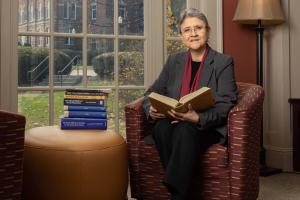
Theology Professor Ahida Pilarski, Ph.D. was featured in the most recent issue of Portraits Magazine's Focus on Faculty.
"The first program in women’s studies in the United States was approved at San Diego State University in 1970. Saint Anselm College also is celebrating the 50th anniversary of women at the college this year. It is nice to know that our college joined this major change of increasing the access of women to education."
Anselmian Events

Nonprofit governance matters, and given the rapid pace of change (i.e. political divides, social turmoil, radical uncertainty), board leadership is more important than ever. These times require that boards lean into leadership and adaptive thinking to support their crucial missions.
In this interactive session, we'll explore the role of governance in ensuring organizational resilience and provide actionable strategies for your board to put into practice. From concept to practical boardroom application, presenter Cathy Trower will address the ways of thinking and skillsets board members need including:
- Understanding and staying focused on the big picture and adaptive challenges
- Acting as a compass amidst changing conditions
- Making meaning of and learning from circumstances
- Asking better questions
- Adapting board work appropriately in partnership with the executive and staff team.
About the speaker:
CATHY A. TROWER , Ph.D. - For 32 years, Dr. Trower has provided consulting and coaching services to over 300 nonprofits including dozens of colleges and universities, independent schools, hospitals and healthcare systems, foundations, federated organizations, associations, and international NGOs. Her consulting focuses on improving board performance including best practices to enhance board culture and deliberations; foster an effective partnership with the CEO and senior leaders; improve strategic thinking and decision-making; and ensure effective committee structure, board composition, and accountability.
Event details for Compass Not Map: How Adaptive Thinking Can Transform Your Board
Join us for this 2 day in-person event that brings together experts, practitioners, policymakers, and advocates to explore critical issues impacting community well-being and equity. The conference features insightful sessions on pressing topics such as loneliness, infectious diseases, drinking water inequities, cannabis, cultural humility, and the role of community health workers, homelessness, H1N1 influenza, and supporting individuals with disabilities.
Target Audience- This conference is ideal for nurses and other healthcare professionals who practice in a variety of public health settings.
Learner Outcomes
Participants will:
- Gain insights into multifaceted public health challenges and innovative solutions across diverse populations and settings.
- Acquire evidence-based strategies, best practices, and policy recommendations to address key public health issues and promote health equity.
- Enhance skills in cultural humility, community engagement, interdisciplinary collaboration, and crisis response for effective public health practice.
- Foster networking opportunities, collaborations, and partnerships to strengthen public health initiatives, resilience, and community well-being.
Up to 11.75 Nursing Contact Hours

Washington DC area alums, we'd love to see you! Join us on May 15th for an alumni reception with special guests Dr. Joseph A. Favazza and Dean Diane Uzarski!
Class of 2024, enjoy the last hoorah before Commencement! Enjoy a champagne brunch in Davison Hall with your classmates as you're inducted into the Saint Anselm College Alumni Association.
Event details for Senior Send Off Brunch and Induction into the Alumni Association
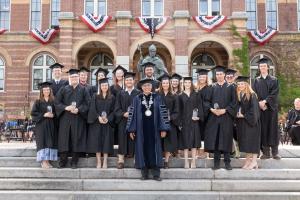
The college community, friends, and family are invited to attend the Senior Honors Convocation on Friday, May 17, 2024, that recognizes the academic achievement of individual members of the undergraduate graduating class of 2024.
Immediately following the Honors Convocation, Abbot Mark and the Benedictine monks will concelebrate the Baccalaureate Mass to thank God for his many blessings during your student’s time at Saint Anselm College.
For more information, please visit https://www.anselm.edu/about/information/parents-families/commencement
Event details for Baccalaureate and Senior Honors Convocation
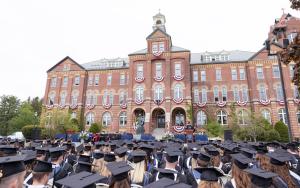
The entire college community, friends, and family are invited to attend the 131st Commencement on Saturday, May 18, 2024. This event will take place outside on the College Quadrangle.
For additional information, please visit https://www.anselm.edu/about/information/parents-families/commencement