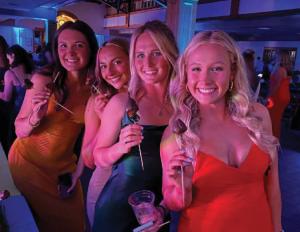
The Effects of Stereotyping
by Hair Color on Self Esteem
by: Shannon Cavanaugh

Welcome
Thank you for visiting my site. This is a brief summary of
my senior research project.
Menu
Key Words: Stereotyping, Hair Color, and Self-Esteem
email:
SCavanau@anselm.edu
Return
to Senior Theses
Psychology
Homepage
Abstract
People stereotype others based on
physical characteristics. One of these characteristics that has stereotypes
associated with it is hair color. Literature tells us of different
stereotypes that are both negative and positive for people with blonde,
brunette, and red hair. The hypothesis of this study is that people are
more likely to engage in stereotyping behavior of others based on hair
color if the individual doing the stereotyping has low self esteem and
low levels of exposure to the stated hair colors.
There were three steps in gathering
information for this study. The first was the administration of the Coopersmith
Self Esteem Inventory - Adult Form. Next participants read one of six stories
about an individual going through their day different hair colors and gender
were the only variables or differences between the stories. The participants
had to judge the reactions of the character to several incidents in the
stories. These judgments took place in the answering of questionnaire comprised
of eleven questions related to the stories. Their responses were based
on a five point Likert scale. The third and final portion of the study
was the completion of a background information questionnaire. This questionnaire
which like the stories and the questions that followed it were all created
specifically for this study by the experimenter. The background information
questionnaire had a multiple choice format and focused on preferences
relating to hair color, exposure to the different hair colors , and personal
information such as age and gender.
A 2 (gender of participants) X 2 (gender
of character) X 3 (hair color) analysis of variance (ANOVA) was performed
on the dependent variable of self esteem. By examining estimated marginal
means of the different variables that people stereotype there was no significant
effects found. This implies a possible break in the tradition of judging
based on appearance as well as a parting from social norms that state ideas
such as what is pretty is good. Several stereotypes such as the perceived
professionalism of blondes and brunettes, preparedness of brunettes, and
brunettes ability to be in control of emotions corresponded with the predicted
stereotypes. While the means for stereotypes about the temperamental nature
of redheads, attractiveness of blondes, and likeability of blondes did
not correspond with what was expected.
These findings indicate that stereotypes
are still present, may be changing or evolving and that future research
should continue to be conducted in order to best understand what stereotypes
are, where they come from, and the connections that they have to physical
characteristics, social cognitions and self concept.
Return to top
Introduction
People seem to know that they are
being judged by others most of the time. People are judged based on their
physical appearance by factors like weight or clothing. They are also judged
by what they have done like what job they have or where they go to college.
These judgments are based on the social categories or stereotypes that
people develop over time. For example, there is evidence that people make
snap judgments about others based upon the shape of their facial features
or tone of their skin (Fink, 2001).Of particular interest is that, previous
research on hair color and stereotypes indicates that people make assumptions
about the character, intelligence, attractiveness and abilities of people
based solely on their hair color (Clayson, 1986) .
It can be surprising to look at how often hair color
is used as a factor in making judgments of other people. It is interesting
to see what biases based on hair color there are and try to understand
how they formed and why they are still in use if they are at all. Self
esteem can play a major role in how people think and feel about others
(Fein & Spencer,1997). Stereotyping and projection can occur when trying
to process this information (Ames, 2004). It was interesting to look at
the influence of self esteem on an individual and see how that relates
to how they are perceived and how it influences the way they think of others
and judge them physically.
Return to top
Methods
The participant group was composed
of 10 male and 30 female introductory psychology students from a small
Catholic liberal arts college in the Northeast ranging in age from 18-22.
Participants received course credit for taking part in this research.
Instructions were read as well as distributed
to students. These instructions stated that an informed consent form would
be completed followed by the completion of a standardized measure of self
schemas. Reading a story with questions to answer based on their first
impressions of an individual in the story was the next step . Then they
were told that a background information questionnaire would be administered
and when completed they would receive feedback about the study and how
to contact the experimenter if they had any questions .
Students were given the adult form of the
Coopersmith Self Esteem Inventory (Coopersmith, 1981). . There were twenty-five
items on the Coopersmith Self Esteem Inventory (SEI). The scale of measure
on this inventory was a choice between checking a box under the column
marked Like Me or a box in a column labeled Not Like Me. The reliability
of the Coopersmith Self Esteem Inventory was calculated by Bedeian, Geaugud,
and Zmud (1977). They examined test-retest reliability using a sample of
103 college students and found coefficients of .82 for females and .80
for males (Bedeian, Geaugud, & Zmud, 1977). Validity for the Coopersmith
Self Esteem Inventory was found to highly correlate with a number of other
scales on convergent validity. Shaver and Robinson (1973) found correlations
of .59 and .60 when comparing the SEI short form and the Rosenberg scale
for college students. (Coopersmith, 1981)
Participants also received one of six versions
of a story created specifically for this study . This story has the same
details of a man or woman going through his or her daily routine and facing
the minor setbacks that occur in a day with the only difference being in
some cases the individual in the story was either a blond, brunette, or
redhead. Hair color and sex were the only variables in the story that changed.
The story was designed to be open to interpretation so that character’s
action could be perceived in a number of ways. Also used in the study
were a number of ways. Also used in the study were a series of questionsabout
the person from the story asking participants to rate the individual in
the story on a number of attributes related to the different hair color
stereotypes. These items were rated by the participants on a five point
Likert scale.
The last item was another questionnaire, also
created for this study by the experimenter, about exposure to hair color
and consisted of 24 questions. This questionnaire was labeled the Background
Information Questionnaire and was created in a multiple choice format
with questions about the participants personal information, preferences
relating to hair color, and exposure to hair color. Other variables such
as height and weight were also included in the survey in an attempt to
keep the participants from figuring out that the focus of the study was
based around hair color.
Return to top
Procedure
Upon entering the testing site, participants
were read instructions and then given an informed consent sheet. Next they
completed the adult form of the Coopersmith Self Esteem Inventory. This
was followed by the random assignment of one of six versions of the story
being asssigned to each participant. They read the stories and then answered
question evaluating the individuals in the stories. Finally an exposure
questionnaire was completed. After they completed all three phases of the
testing they were fully debriefed.
Return to top
Results
Several different types of analysis
were performed on the data collected in this study. A 2 (gender of
participants) X 2 (gender of character) X 3 (hair color) analysis of variance
(ANOVA) was performed on the dependent variable of self esteem. An ANOVA
was used because they try to show the differences or variance between
groups. Also to see if there were any significant interactions between
gender and hair color, cross-tabs of the gender of participant and hair
color of character, as well as gender of character and hair color
of character were done. These cross tabs had hoped to show significance
based on differences between nominal categories of information but no significance
was found.
The dependant variables in the study was the
level of stereotyping done by the participants of the characters as measured
by participants‘ responses on the questionnaire following the stories they
read. The independent variables were the hair color of the character in
the story as well as the gender of the character in the story. The dependent
variable was influenced by their exposure to these different hair colors
and their self esteem. The Alpha score of the reliability analysis - scale
was Alpha= .7289 for the 43 cases of the 11 items tested. This indicated
the degree to which the items on the questionnaires created for this study
were reliable.
The analysis of variance (ANOVA) did not produce
any significant main effects. The closest to finding of significance was
the gender condition (hair color ) (F (df=2)=2.950, p = .067) interaction.
When looking a the conditions of gender of
the character and hair color of character some interesting means concerning
self esteem appear. These means show that males in the brunette condition
had the highest self esteem. For females those with the highest self esteem
were in the blonde condition. These findings do not have any impact on
the study however because the participants were tested for self esteem
high or low self esteem levels before completing the remainder of the questionnaires
and therefore self esteem levels were not influenced by condition.
Other important means were found in the ANOVA.
There were interesting combinations of expected and unexpected results
in the presence or absence of stereotypes.When looking at the dependent
variable as the characteristics of the character and the condition of hair
color the expected stereotypical responses were demonstrated for professionalism,
preparedness, and in control of emotions. Professionalism was highest for
blondes with 2.875 for the mean compared to 2.825 for brunettes and 2.700
for redheads. Preparedness placed brunettes in the forefront with a mean
of 2.075 compared to the 1.900and 1.483 means for redheads and blondes
respectively. The characteristic of being in control of emotions
was represented with a mean for blondes of 2.858, brunettes at 2.775, and
redheads at only 2.600.Each of these characteristics demonstrated the stereotypes
mentioned in earlier literature. The means for temperament, attractiveness,
and likeability did not correspond with what was expected. (See Table
2). The temperamental characteristic had means of was 3.400
for blondes , 3.375 for brunettes and 3.350 for redheads. Attractiveness
was brunettes with a mean of 3.325, redheads with a mean 3.000, and blondes
with a mean of 2.992. Likeability was rated with means for redheads of
2.925, blondes of 2.842 and brunette of 2.700.
A deeper investigation that looked at
not only the dependent variable as the characteristics of the character
but also the condition of the gender or the character ancondition of the
hair color of the character provided some means worth mentioning. The best
examples of important means in this section are the means for the temperamental
rating for female redheads with a mean of 2.550 compared to the higher
means of 3.800 for blondes and 3.600 for brunettes. These means are contrary
to what the literature suggested we would find. An example of means that
would have been predicated by previous research were that ratings
for perceived responsibility in females. Brunettes had the highest mean
with 3.050, followed by 2.750 for blondes, and 2.000 for redheads.
The last group of means that we will
discuss provided information about means of the dependent variables of
the characteristics of individuals in the stories as well but this section
was broken down by the conditions of gender and hair color as well as the
gender of the participant. This provides many interesting means that give
information about which stereotypes were present in the study and which
ones the participants did not demonstrate. One example is the perceived
preparedness of female brunette characters by male participants with a
mean of 2.500 which was higher than all of the other scores. This follows
the expected stereotypes. An example of means that did not follow the expected
route is the female redheads being seen as the most warm by male participants.
Return to top
Discussion
This study intended to demonstrate
the tendency people have to stereotype based on hair color when all other
variables are controlled. It was expected that low levels of self esteem
would contribute to a higher degree of stereotyping and that the
more exposed to different stereotypes an individual was the more likely
they would be to avoid using stereotypes. However this was not found.
The data failed to support the hypothesis and expected stereotypes
were not always demonstrated by the participants.
Surprisingly they not only did not follow
the patterns of stereotyping that the literature suggested, but in some
cases actually answered questions in the complete opposite manner of the
stereotype, thus supporting the reverse of the stereotype. Means discussed
in the results section provide the evidence for this. Characteristics like
professionalism, preparedness, and in control of emotions corresponded
with the predicted stereotypes while the means for temperament, attractiveness,
and likeability did not correspond with what was expected. A specific example
of this would be the question on likeableness which indicated that redheads
were seen as the most likeable. According to the literature blondes should
have been seen as the most likeable (Clayson, 1986).
Return to top
Practical Implications
Understanding and being
sensitive to stereotypes is important. This information could be used in
counseling to be sure sensitive issues an individual might have are not
inadvertently ignored or irritated. Also this is important in interpersonal
relationships, sensitivity to a partners’ issues about being stereotyped
would be very helpful to the relationship. The more we know about these
stereotypes the more information we will have about each other and the
best ways to interact. Stereotypes are the first way that many people decide
how to interact with other individuals and can have an impact on how someone
who is being stereotyped feels about themselves. Understanding these interactions,
what the outcomes and consequences of stereotyping are, why it is done,
and what all of this information means is an important issue to research.
Return to top
Conclusion
In conclusion in this study it appears
that not what was found but what was not is the most important thing to
consider. Are we stereotyping less or not at all, or are the stereotypes
we associate with hair color actually connected to something else like
attractiveness, age or gender? These are possibilities to consider.
Return to top
Relevant Links
Stereotypes:
Defintion and Related Topics
Self Esteem:
Research
Hair Color: What's
your Inner Hair Color?
Saint Anselm College
Google
APA
Return to top
References
Ames, D.(2004). Strategies for social inference: A similarity
contingency model of projection and stereotyping in attribute prevalence
estimates. Journal of Personality and Social Psychology, 87(5), 573-585.
Clayson, D. (1986). Redheads and Blondes: Stereotypic Images. Psychological
Reports, 59 (2), 811-816
Coopersmith, S.(1981). Self Esteem Inventories (SEI). Palo Alto, CA:
Consulting Psychologists Press.
Fein, S., and Spencer, S. (1997). Prejudice as self-image maintenance:
Affirming the self through derogating others. Journal of Personality
and Social Psychology, 73(1), 31-44.
Fink, B. (2001). Human (Homo sapiens) facial attractiveness in relation
to skin texture. Journal of Comparative Anatomy,115 (1), 92-99.
Return to top
|